
Winter Striper & Hybrid Fishing: Find the Bait, Find the Fish
When the temperatures drop and the lakes quiet down, a lot of anglers hang up their rods for the season. But winter can be one of the most rewarding times of year to target striped bass and hybrids — if you’re willing to slow down, think like a baitfish, and be patient.
Cold water changes everything. The fish move differently, the bait behaves differently, and the best strategy is often the opposite of what works in spring or fall. Here’s how to dial in winter striper and hybrid fishing so you spend more time hooked up — and less time guessing.
Follow the Food: Winter Bait Location 101
Stripers and hybrids are slaves to two things in winter:
➡ Oxygen
➡ Food
Baitfish like threadfin and gizzard shad aren’t cruising the shallows this time of year. Cold water pushes them to more temperature-stable zones — often over deep water, creek channels, humps, and river bends. The predators follow.
🔍 Start With Your Electronics
Your sonar isn’t optional in winter — it’s the MOST important tool you have.
Look for:
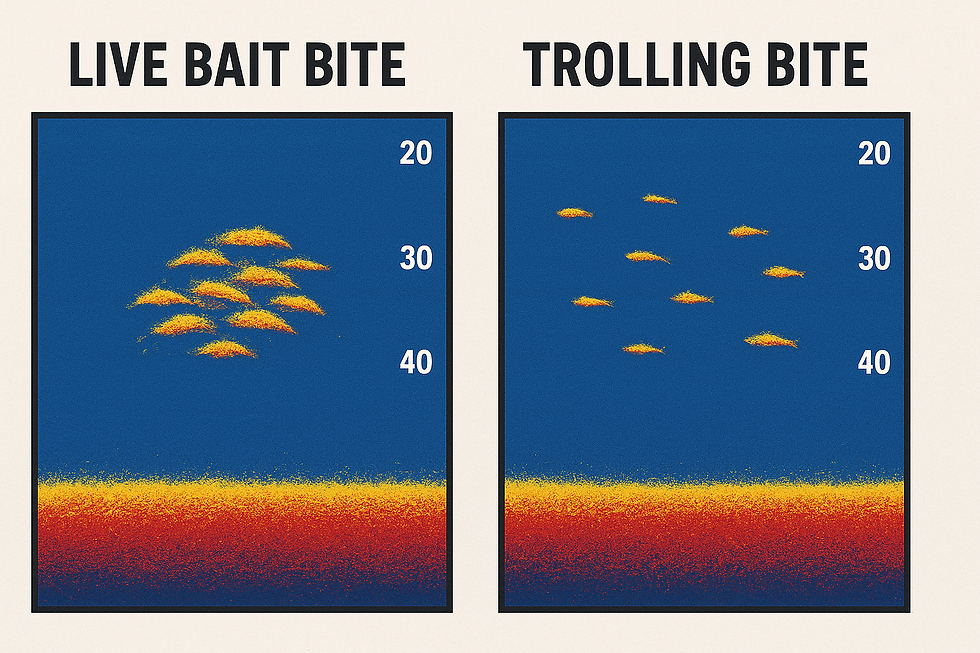
Dense, cloudy balls suspended in the water column — that’s bait.
Bait pushed tight to structure — humps, ledges, old roadbeds.
Arcs or streaks above or below the bait — those are your stripers and hybrids.
If you don’t see bait, keep moving. Winter fish rarely hang out where there’s nothing to eat.
Typical Winter Hotspots:
Mouths of creeks
Main-lake channel edges
Deep flats near drop-offs
25–60 feet of water (varies by lake)
Areas birds are diving — your aerial scouts
Some days the bait stacks up deep. Other days it suspends mid-column. The key is finding the right depth — not the right “spot.”
Presentation: Subtle Wins in Cold Water
Winter stripers and hybrids aren’t chasing down every meal. Their metabolism slows — so your approach should too.
🎣 Live Bait
Still one of the best producers.
Great winter options include:
Threadfin shad
Gizzards
Large minnows
Present them:
On downlines at bait depth
Slow-trolled behind the boat
Or on weighted freelines above suspended schools
Match your weight to depth and wind — the goal is natural movement, not a spinning kite.
🧊 Artificial Baits — Keep It Simple
Winter plastics and jigs shine when worked slowly:
Best choices:
1–2 oz jigheads with soft plastics
Spoons
Flukes
Umbrella rigs (reeeeally slow)
Retrieve Rule:
Slow. Then slower.
Now half that speed again.
Hop spoons gently — not aggressively. Think dying bait, not fleeing prey.
Fish the Bait — Not the Clock
Winter fishing isn’t fast-paced. You may graph for an hour before dropping a line. And once you find them?
They still may need convincing.
This is where most anglers lose the game.
❄ The Winter Fishing Mindset:
Trust your graph
Stay on the bait
Commit to the area
Let the fish cycle through
Stripers and hybrids often slide in and out of schools of bait — feeding in short windows. Leaving too early can mean missing the best bite of the day.
Weather & Conditions Matter
Winter fish respond to changes.
📉 Bluebird post-front days:
Fish slow and deep.
🌥 Cloudy, stable weather:
Fish may suspend higher and feed longer.
🌬 Wind:
Pushes bait — work wind-blown structure.
Gear: Stay Ready & Stay Warm
Cold-weather fishing success isn’t only about skill — it’s about staying out there long enough to get bit.
Dress in layers, carry gloves, and keep gear tidy so you aren’t fumbling in the cold. A clean deck and organized rods make a real difference when the bite turns on.
The Secret Ingredient: Patience
Winter striper and hybrid fishing is a thinking person’s game. It’s not about covering water fast — it’s about reading the lake and committing to the bait.
You may grind all morning for one small window…
…but that window can produce the biggest fish of the year.
And when that rod loads up and the drag starts screaming across a quiet winter lake?
You’ll remember why you stayed.
Comments